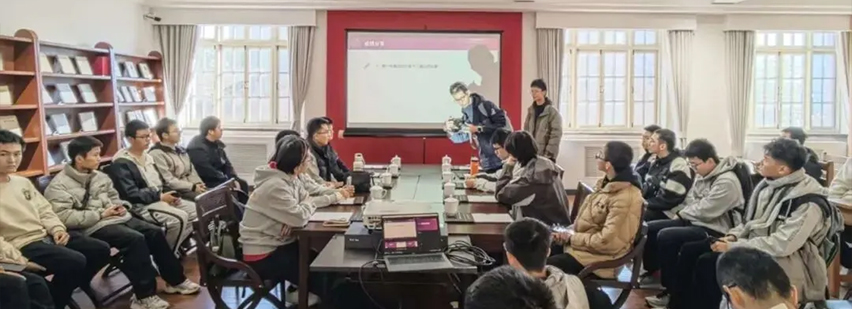
Shuimu College has always regarded the class and league groups as an important cornerstone for student growth, and is committed to building a cohesive and vibrant educational community. Each class and league group carries out a variety of distinctive activities in areas such as ideological guidance, academic atmosphere construction, cultural and sports activities, and volunteer public welfare. Through carriers such as themed league days, academic seminars, and sports competitions, a culture of "big fish leading, small fish following" has been created. Class and league group construction not only strengthens the sense of belonging among students but also serves as an important platform for nurturing patriotism and national sentiment, as well as for honing comprehensive abilities, continuously injecting vitality into the cultivation of top-notch innovative talents for the College.
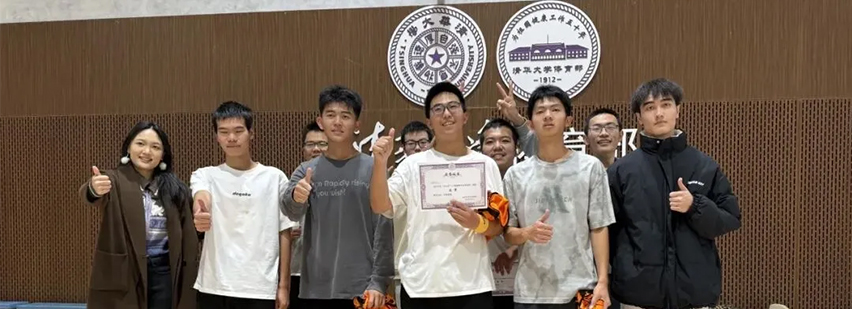
The Party building work at Shuimu College has always regarded the student Party branch and the Shuimu TMS branch as important forces leading student growth, and is committed to creating an educational community with ideological depth and practical vitality. The student Party branch and the Shuimu TMS branch have carried out a series of characteristic activities in theoretical learning, practical training, ideological exchange, and cultural inheritance. Through Party class groups, field research, thematic discussions, and other platforms, they have fostered a Party building culture of "learning, thinking, practicing, and understanding, and the unity of knowledge and action".
Since its establishment, Shuimu College has adhered to the philosophy of "No sports, no Tsinghua" and "With aesthetic education, a better Tsinghua", and has built a distinctive sports and aesthetic education system. In terms of sports, Shuimu College has uniquely created the "College-featured Sports Courses" and appointed five sports class advisors for different sports. Based on the characteristics of each project, the College has established and supported sports clubs covering seven different sports, including basketball, football, and badminton, attracting a wide range of students from the College to participate. The College actively innovates collective exercise forms, integrating some "niche projects" into quality training to enrich students' experiences. The College also organizes internal league matches for basketball, badminton, table tennis, and other sports, cultivating students' competitive sports spirit and creating a vibrant sports atmosphere.
Shuimu College encourages students to step out of the campus and into society, to measure the vast land of our motherland with their feet and observe local customs with their own eyes. Each class and league actively carries out mid-semester practices, visiting revolutionary bases to deepen ideological guidance, entering high-tech enterprises to explore technological innovation, and strengthening collective construction through practice. The College regards social practice during winter and summer vacations as a key link in talent cultivation. Focusing on themes such as "AI+" and "Future Engineering", students are organized to travel to various parts of the country to extensively and deeply engage in various practices such as learning and research, professional cognition, special surveys, and service construction. At the same time, the College pays attention to cultivating students' global vision, organizing overseas practice teams to showcase the wisdom and contribute the strength of youth in international exchanges.
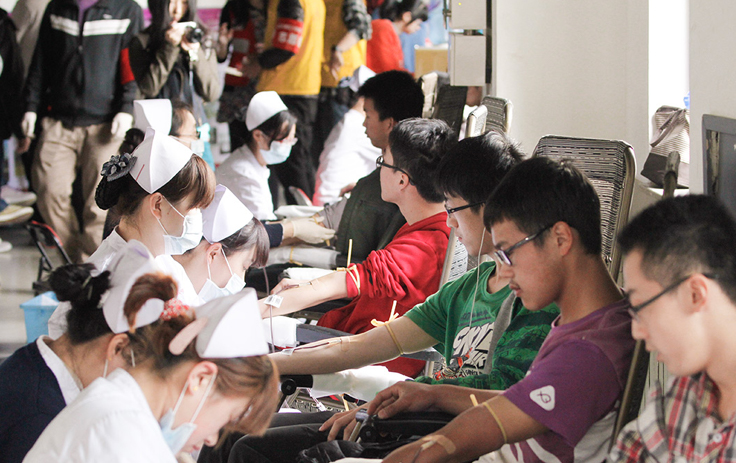
Shuimu College has been deeply involved in the field of volunteer public welfare, creating a diverse service matrix. In the "Qing" year, the Youth League branch organized volunteer services such as book sorting, campus cleaning, and patrol duty, uniting youth efforts to build a beautiful campus. Volunteers in the mobile duty room served as digital guides, helping the elderly solve smartphone usage problems through one-on-one accompanying teaching, listening to their needs to optimize services, and building a bridge of connection in the intelligent era. The community science history popularization project recruited volunteers for courseware production and classroom teaching, telling stories about network development, space exploration, and other topics in a fun and interactive way, igniting the scientific dreams of young people. The "Supporting the Military and Giving Priority to Military Families" volunteer project, in deep cooperation with the Armed Forces Department, passed on social care and demonstrated responsibility through online Q&A for military families' children and offline training for military examinations.
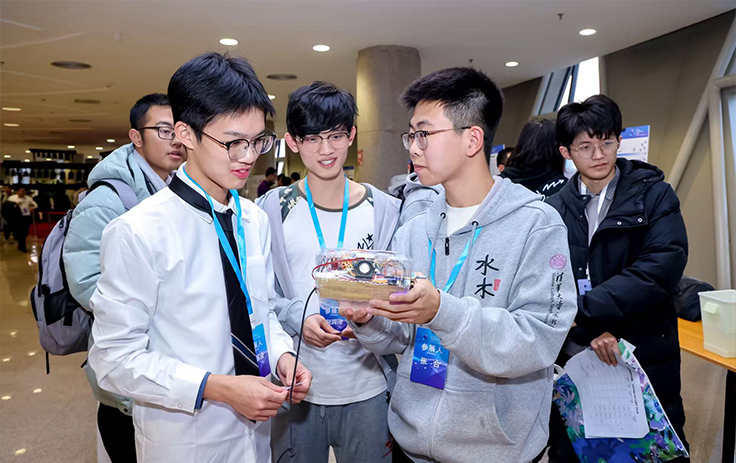
Shuimu College is committed to fostering a unique and vibrant atmosphere for scientific research and technological innovation. The "Shuimu Erudition Hall" launched for freshmen expands students' academic horizons through small academic salons. Young teachers, post-doctoral researchers, and outstanding senior doctoral students are invited to give lectures, introducing the overview of fields and the latest innovative achievements centered around cutting-edge directions such as "AI+" and "Future Engineering", and engaging in face-to-face in-depth exchanges with no more than 20 students. The College collaborates with departments such as civil engineering and electronics to organize various technological innovation competitions, including the Structural Design Competition and the "Ansi (China) Cup" Challenge, providing students with an important platform to engage in scientific research and participate in innovative practices, helping them enhance their scientific research literacy and engineering capabilities in the competitive and cooperative environment of the competitions. At the same time, the College also offers various skill training courses for all students, such as the "Computer Literacy Training Camp", systematically improving students' practical skills in scientific research and learning, laying a solid foundation for future academic exploration and innovative practices.